

Mitsubishi, long the market incumbent in the cold-climate world (at least in MA), has released their latest R-454B models last summer and as of October 2026, we’ve installed dozens of these heat pumps. Here are our thoughts.
Executive summary:
We really like the ducted air handler for its small size, and not requiring breakers
Wifi out of the box (ductless only) & better app are the big upgrades since 2025
Premium prices, still the market leader, but ducted efficiency < Midea, LG and doesn’t come with wifi out of the box
What We Like
Ducted
Air handler size. Mitsubishi makes one of the smallest air handlers on the market. This is incredibly, incredibly useful because heat pumps in basements typically need a return box below them, which adds ~15 inches.
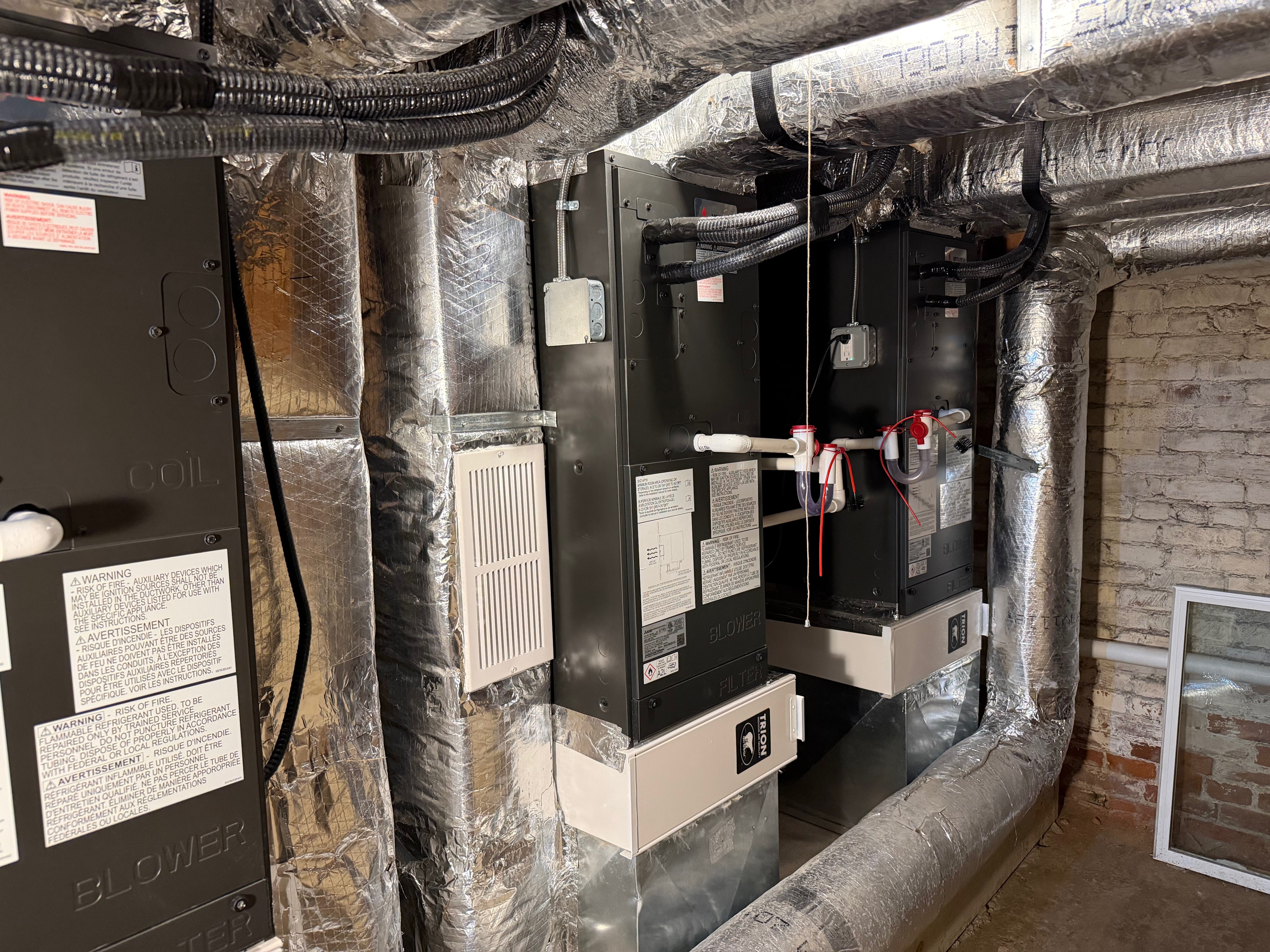
Having a tiny air handler really helps to avoid clearance issues. Time and time again, we’ve decided to go with Mitsubishi simply because it fits better.
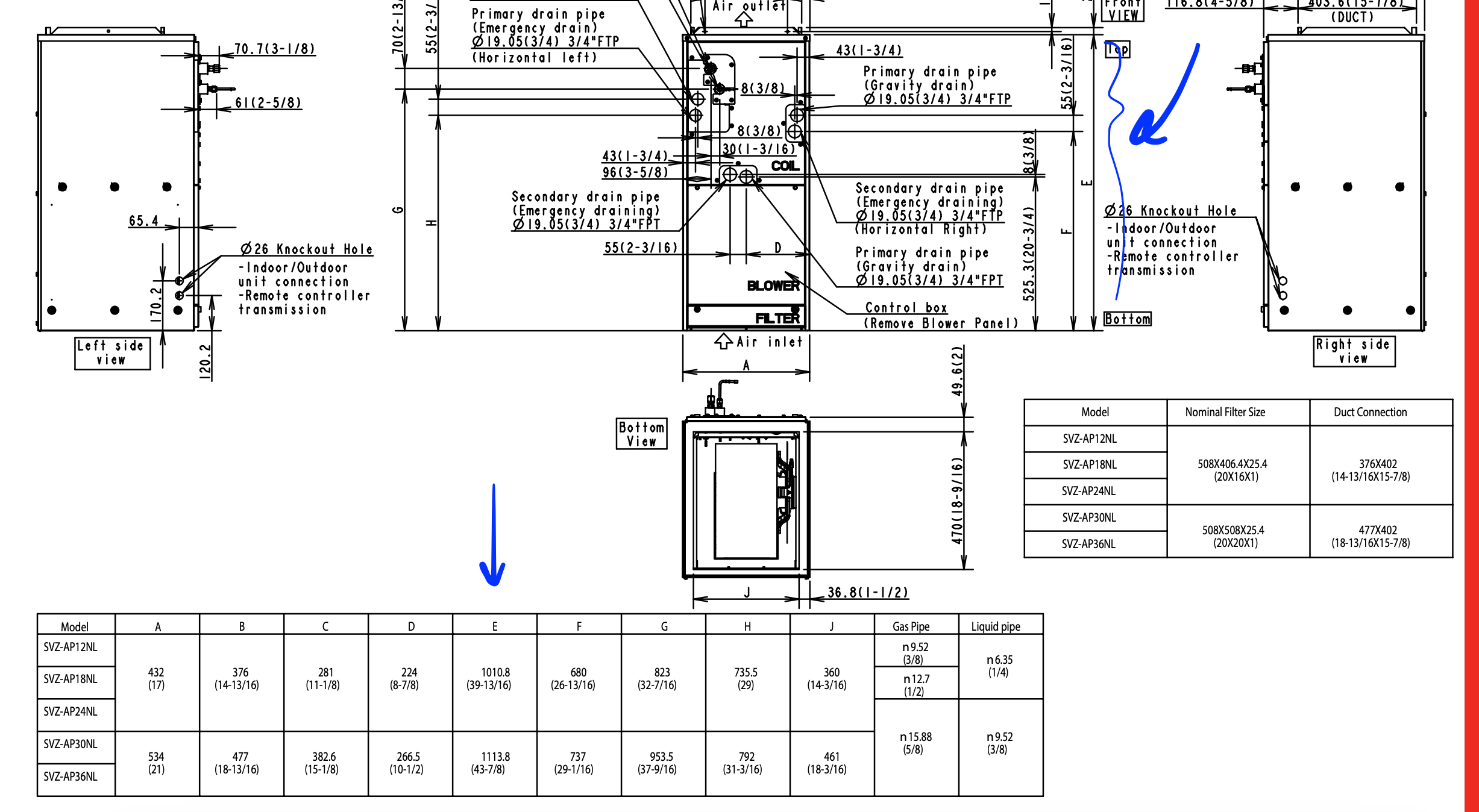
Air handler gets its power from the condenser. This saves you a breaker slot or 2, and it saves the electrical team from having to run a wire from the air handler (annoying, if it’s in the attic). Plus, the MHK2 wireless thermostat also doesn’t need to be wired. So from an electrical wiring standpoint, Mitsubishi is great.
This, combined with the size factor, makes up for the fact that its heating efficiency or SEER2 ratings aren’t as good as, say, Midea or LG.
Ductless
Mitsubishi seems to have gone all-in on the boxy profile of the FS units of the prior generation, except this time we have slightly rounded bezels/display corners.
Depending on your aesthetic preferences, this is either nicer or more clunky than LG’s curved mini-splits:


I’d note that these units are like, thick. The LG units are flatter, but then again, this is the FX unit that has the sensor.
Otherwise, seems pretty standard. It almost reminds me of Quilt’s mini-splits, which has gone all the way to the “as boxy as possible” aesthetic, but I almost personally prefer the cleaner, flat look.
GX units. Since these are more narrow than the FX units above, they are more boxy. But the advantage is that they’re great at fitting into smaller spaces:


I would recommend using these units for smaller rooms, such as bedrooms.
Floor units look like this:
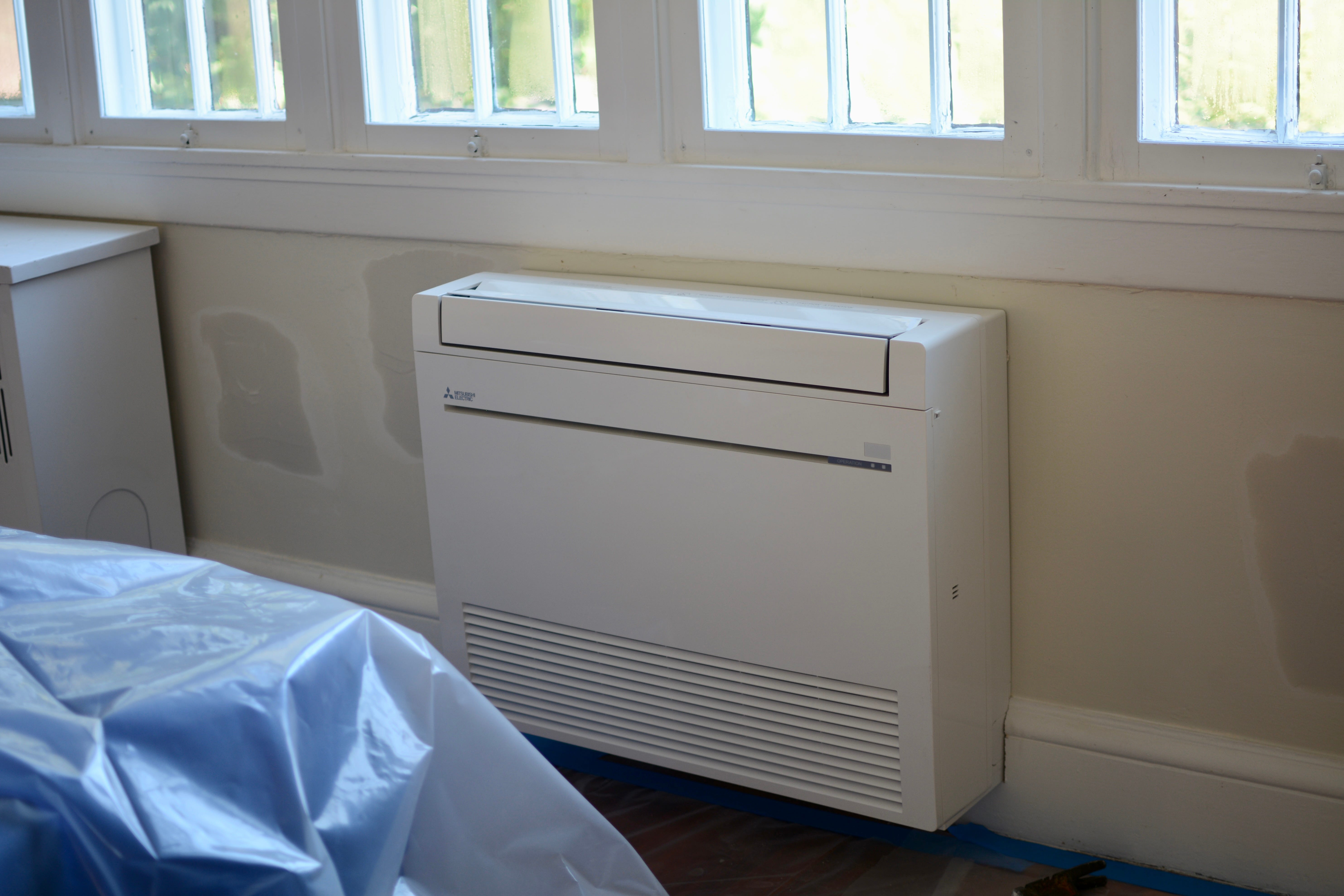
And ceiling cassettes, importantly, are the smallest in size of any brand, which means that if someone wants a ceiling cassette, we’re most likely going to quote Mitsubishi.

Turndown. Much better than before, though still not as good as Daikin. We wrote about this here:
Outdoor units. These are pretty much the same as the prior generation, so no big differences there. There are 3 form factors: double fan, single fan (large), and single fan (small).
Here’s the double fan unit, which you’d likely encounter for MXZ-SM36 (multi-zone 3-ton & over), as well as the SVZ-24 (ducted 2-ton & over) models:


Here’s the single fan, large variation - in this case, for a 1.5 ton ducted SUZ unit:
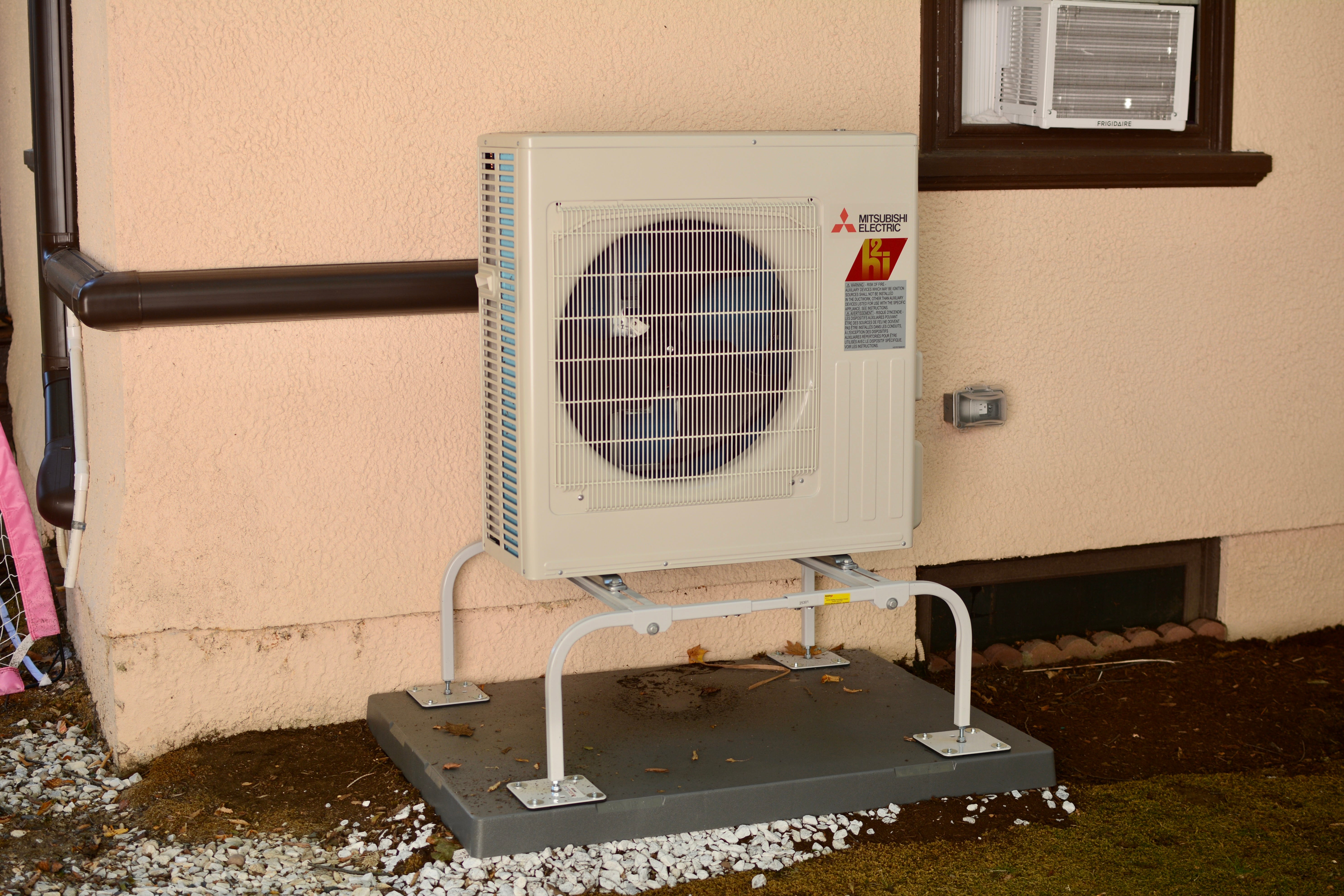
And finally, the smallest variation - in this case, the redesigned MXZ-3D30NLHZ 3-port multi-zone condenser:


I’d say that the MXZ-3D30NLHZ & its smaller 2-ton & 1.5 ton variations are impressively small. I like the way they look. Great for wall brackets.
App & Wifi. Thankfully, these days all Mitsubishi ductless models (note: ducted does not come with wifi out of the box) come with wifi connectivity out of the box. And the app is actually good now:
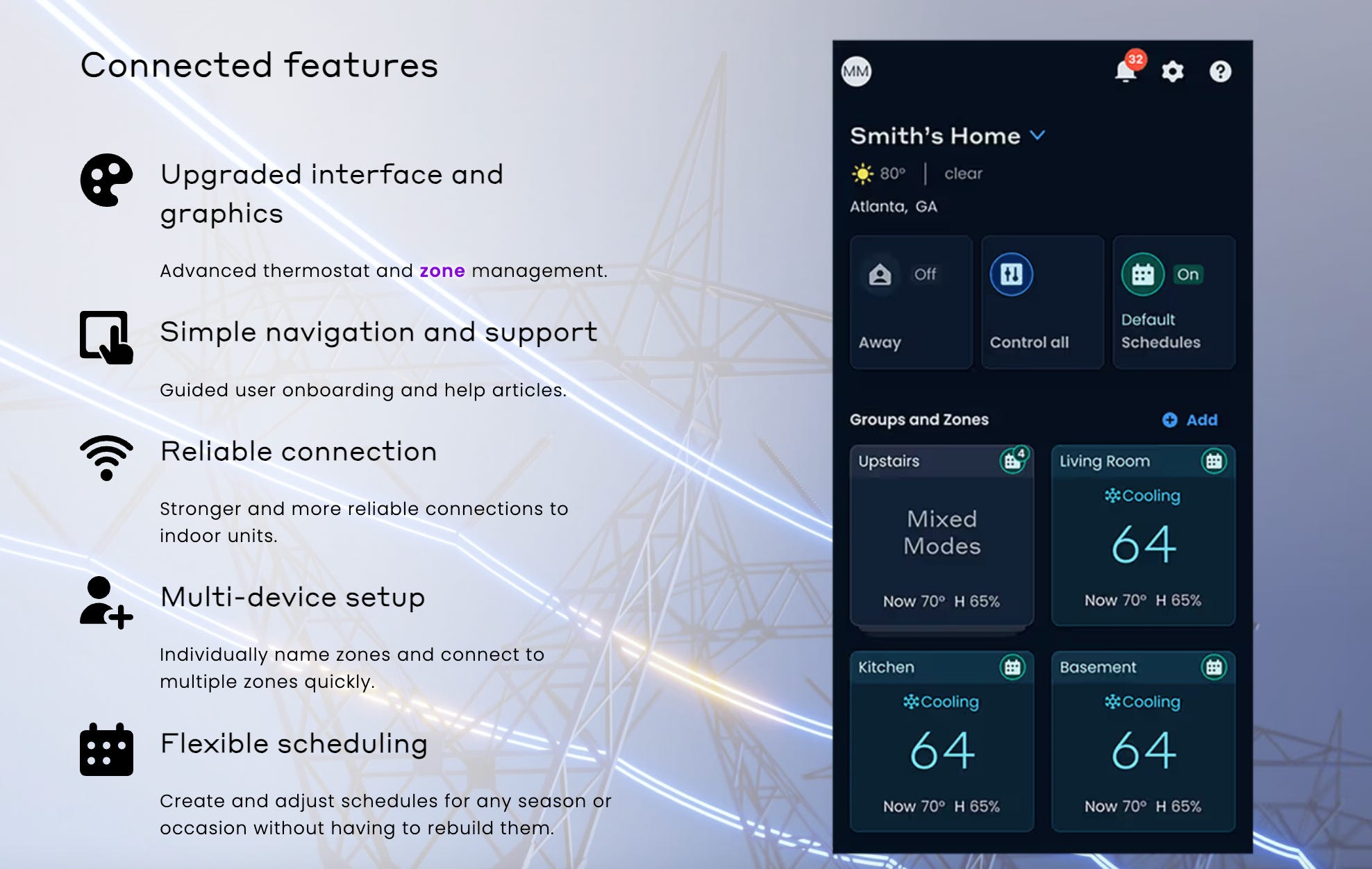
Hey, props to them for listening to their users dog on Kumo Cloud for the better part of the past few years.
What We Don’t Like
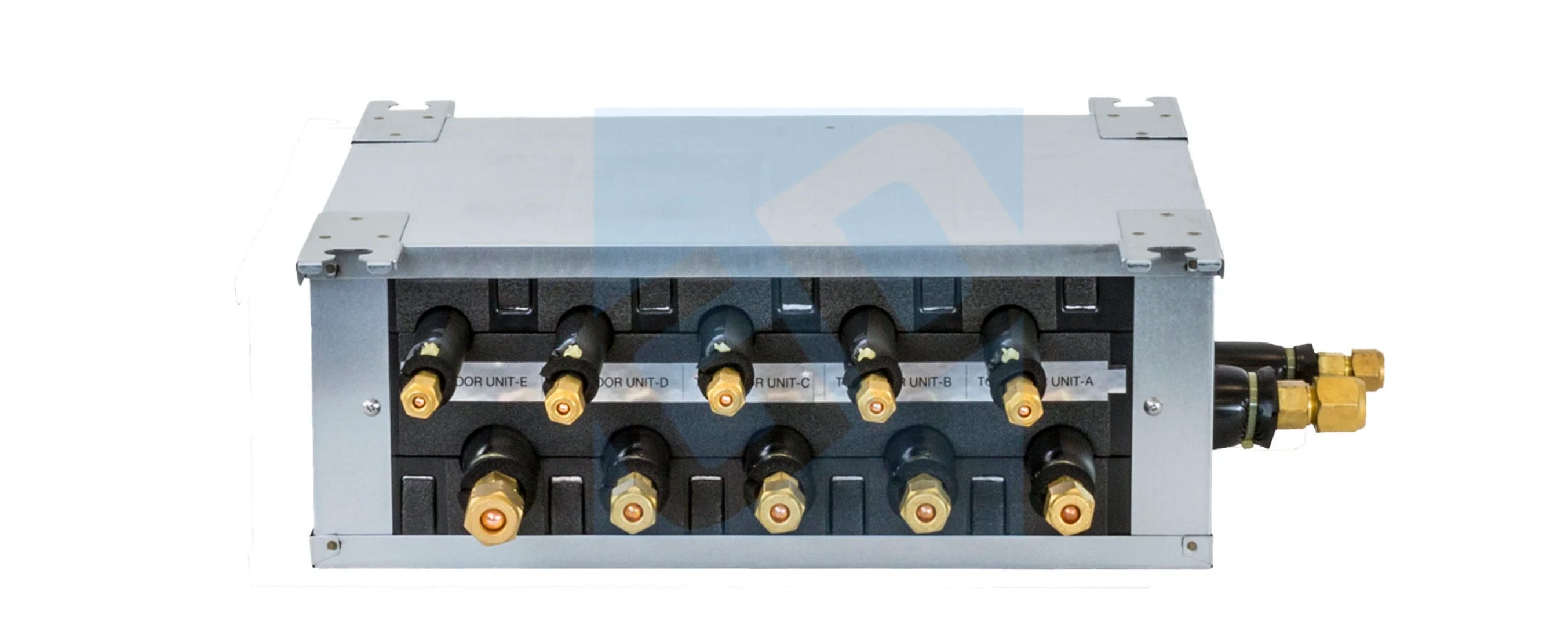
Branch boxes. You can use 1 branch box to connect an outdoor unit to 5 indoor units. LG requires 2 branch boxes (more cost, more complexity) for 5 units, while Daikin avoids branch boxes entirely. You can actually put a cover on these branch boxes, which means you can mount them outside, which is useful if you’re limited on basement wall space.
While the 1x branch box setup is far better than 2, it’s still not as good as Daikin’s.
Electricity. Mitsubishi units do love electricity. For example, the 3 ton unit requires a 45 amp breaker vs. 40 amps for a Daikin 4MXT36 model. This may be a relevant consideration for those who have tight margins on electrical load, but I suppose it’s not that different.

GX unit boxiness. Self-explanatory, if you’re not into the look.

Missing refrigerant leak detection sensors. No longer an issue. See footnote1.
No wifi for ducted air handlers. Want wifi for your MHK2 thermostat? Well, you can’t have it. Instead, you’ll have to spend $200 buying this:
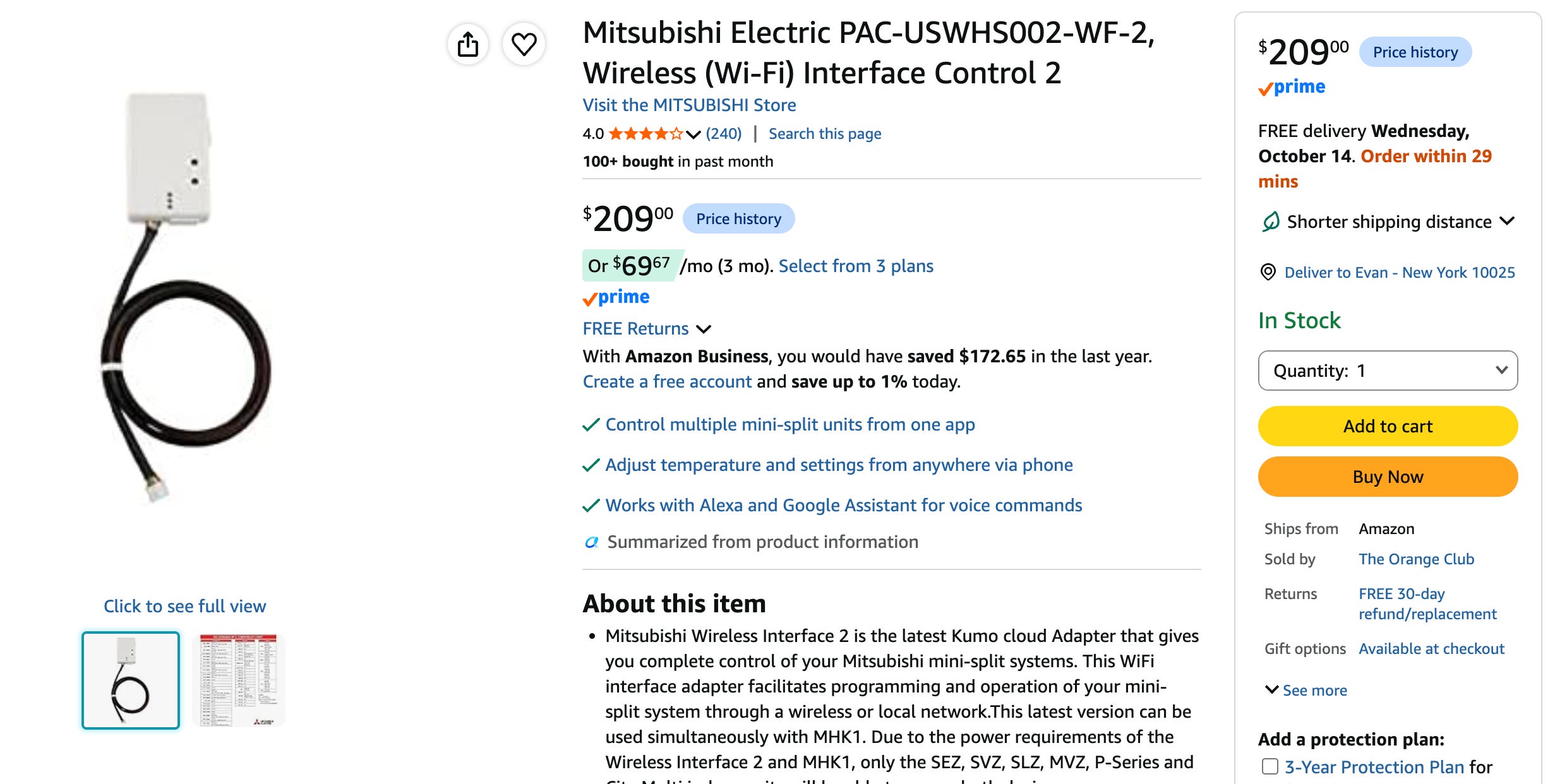
You previously had to do this for mini-splits, but no longer.


$$$. Yeah, with Mitsubishi it’s like buying a Lexus. Reliable? Yes. Fancy? Yes. But also, I could just get a Toyota, which is what I regard Daikin to be (reliable, good value, not as good as Lexus but solid/possibly the best option for most people).
Conclusion
Verdict: Mitsubishi continues to be a solid, leading choice. Their indoor units lean into the boxy look & look quite nice if you’re into that. The outdoor units are the same. Not a bad option by any means, but also not the only option these days.
But the air handler is where it truly excels. And not on an efficiency basis; other brands are better in that department. But when other brands offer air handlers at 47” and Mitsubishi’s is 39, that’s the critical difference.
Want to see all the other options? Take a look here:
Honest Review of LG, Mitsu, Daikin, Midea+

We wrote an article last summer about all the new R-32 & R-454B models that were hitting the market. Now, we have a TON of real-world installation experience with these models.
A2L refrigerants (which includes R-454B) require refrigerant leak detection sensors, and for some reason, certain ductless mini-split units do not currently ship with these sensors built-in. Mitsubishi support has only recently encountered this error, and may not be as familiar with it.
The fix is simple: you just need to buy the leak detection sensors, and install it. May be a bit annoying if your contractor didn’t expect this upfront, though. We expect this to be resolved by 2026.